Who was Raleigh Brown Ijams?
1858 – 1907
Raleigh, or “R.B.”, was born in 1858 into one of the older mercantile families of the mid-Atlantic. The Ijams family had been in Maryland since the seventeenth century — the village of Ijamsville in Frederick County bears their name, and the first railroad built in the state ran through Ijams land.1 Raised in Baltimore after the Civil War broke his father’s fortune, Raleigh later followed his brother to Manhattan. He never married, never had children, and died at 48 of tuberculosis in Goldsboro, North Carolina. Through his brief 1905 letter to The Century Magazine about a young Helen Keller — and through the records his family left behind — we can reconstruct the scaffolding of his life with unusual completeness, even as the man himself remains half-glimpsed.
Beginnings
Raleigh was the fifth of nine children — five sons and four daughters. His father, James Ijams (1819–1873), was born in Frederick County, Maryland and by 1860 was keeping a hotel in Charles Town, Jefferson County, Virginia. His mother, Dorcas Susan Mitchell Tabb (1832–1898), was the daughter of John Tabb of Berkeley County, Virginia; the Tabbs had been prominent in the Shenandoah valley since the seventeenth century, with one ancestor serving under General Gates during the Revolution.1 When the Civil War came, both her family’s region and her husband’s livelihood would be undone.
Father - James Ijams
From the 1860 census,2 James appears as a 41-year-old hotel keeper with a personal estate of $2,000 — comfortable middle-bourgeois wealth — living with his wife, six children, and his widowed mother-in-law Arabella Tabb. Eleven boarders lodged in the hotel itself, a slice of late-antebellum Charles Town life. During the war James served as a private in the 3rd Battalion of Virginia Valley Reserves, Augusta County Reserves, Company A;3 his son’s later biographical sketch places him “in the commissariat department” — Confederate-army supply procurement — and “under General Stuart” earlier in the war.1 Eight years after Appomattox he was dead, buried in Baltimore at 53, and the wartime wealth had collapsed completely.
Enslaved People in the Household
The 1860 federal slave schedule documents that James enslaved seven people.4 Names were not recorded — standard practice on the schedule — only age, sex, color, and whether the enslaved person had escaped within the preceding year. The Ancestry digitization is the most legible.5
| Age | Sex | Color | Fugitive |
|---|---|---|---|
| 29 | Female | Black | false |
| 13 | Female | Mulatto | false |
| 68 | Male | Black | Escaped |
| 40 | Female | Black | Escaped |
| 36 | Male | Mulatto | Escaped |
| 22 | Male | Mulatto | Escaped |
| 25 | Female | Black | Escaped |
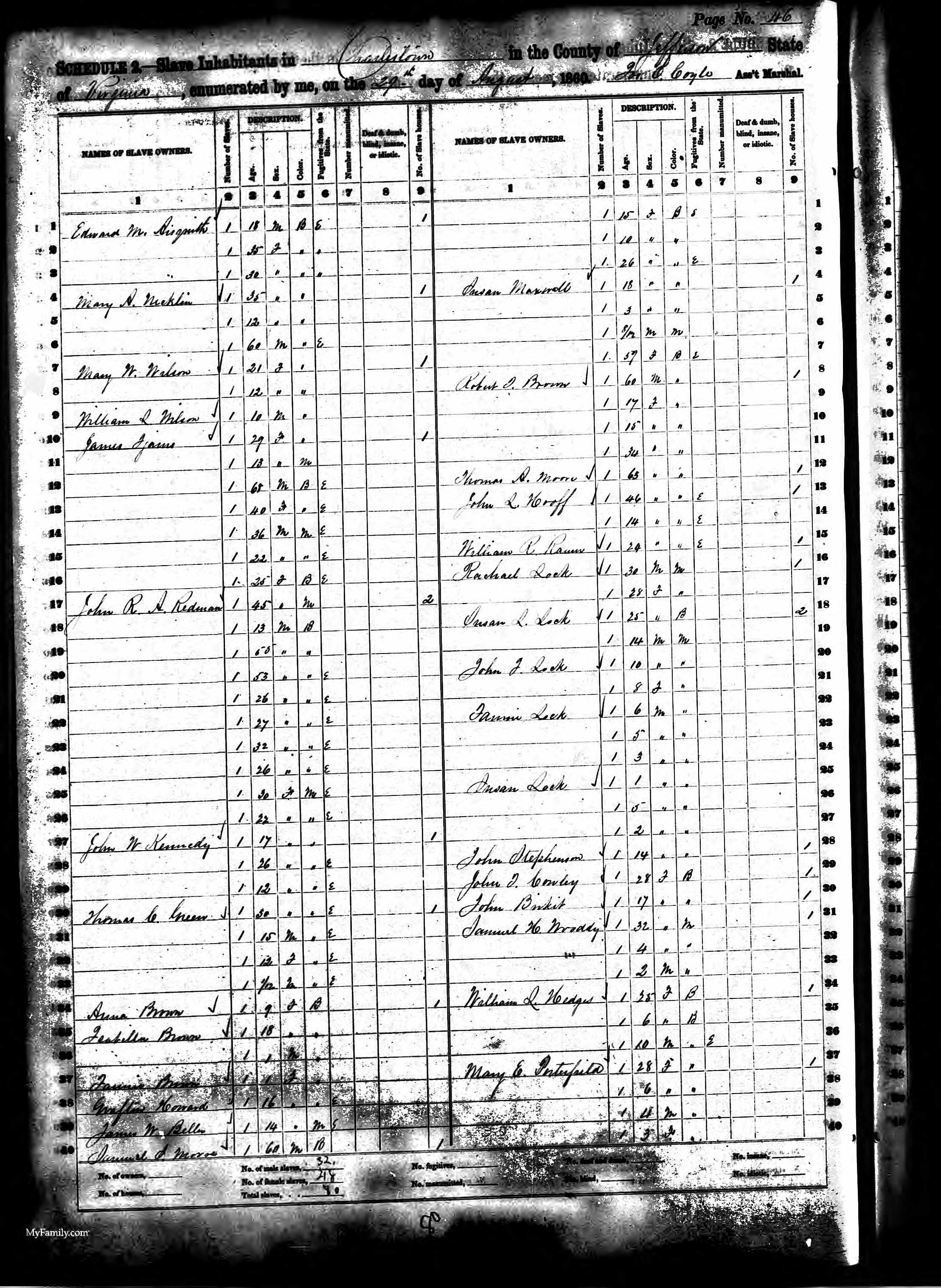
Five of the seven escaped in the year preceding the enumeration — an unusually high proportion, and it reflects geography. The Ijams household sat in Jefferson County, then in Virginia, today the easternmost county of West Virginia: a narrow neck of land that pushes north between the free state of Pennsylvania and a sympathetic Maryland panhandle. Harpers Ferry was just down the road at the southern tip of the county, and by 1859 the routes through South Mountain into Pennsylvania were a well-established Underground Railroad corridor. John Brown’s raid on the Harpers Ferry arsenal took place in October of that year, within months of the escapes recorded on this schedule. The Ijams household’s seven held people were caught up in the unraveling of slavery in the upper South — an unraveling the war about to begin would complete.
Moving to Baltimore
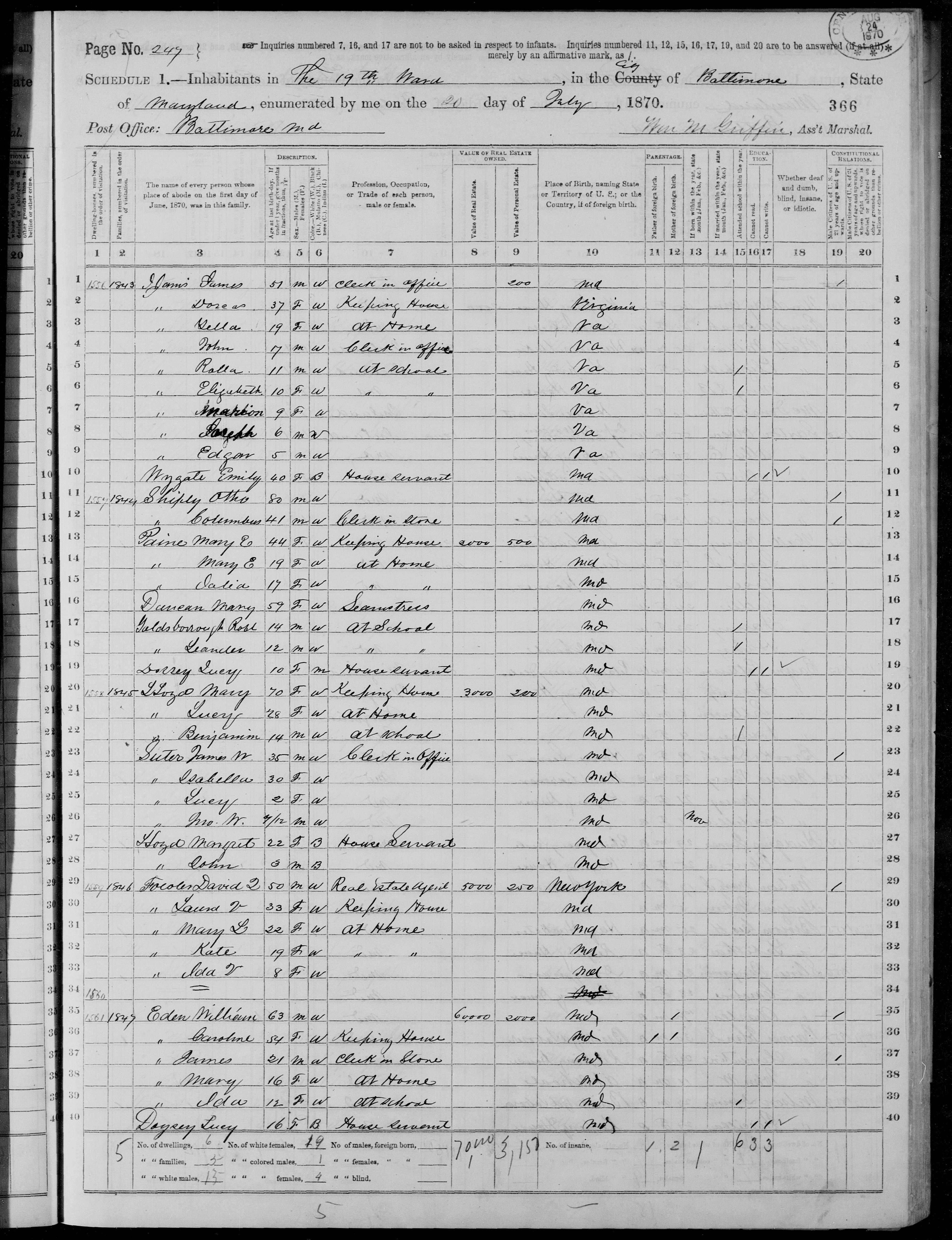
By 1870 the family had relocated to Baltimore, and the wartime collapse is plainly recorded.6 James, age 51, worked as a “Clerk in Office” with a personal estate of just $200 — a tenfold reduction from his pre-war wealth. Dorcas was “Keeping House” with seven of their children at home: Della (19), John (17), “Rolla” (11), Elizabeth (10), Marion (9), Joseph (6), and Edgar (5). The 11-year-old “Rolla” is almost certainly Raleigh — the age is within the typical census error margin, no other child in the family is unaccounted for, and the variant likely represents a phonetic rendering by the enumerator or a transcription quirk in the cursive original. James died three years later, on 30 June 1873, leaving Dorcas a 41-year-old widow with eight children still alive.
Adulthood
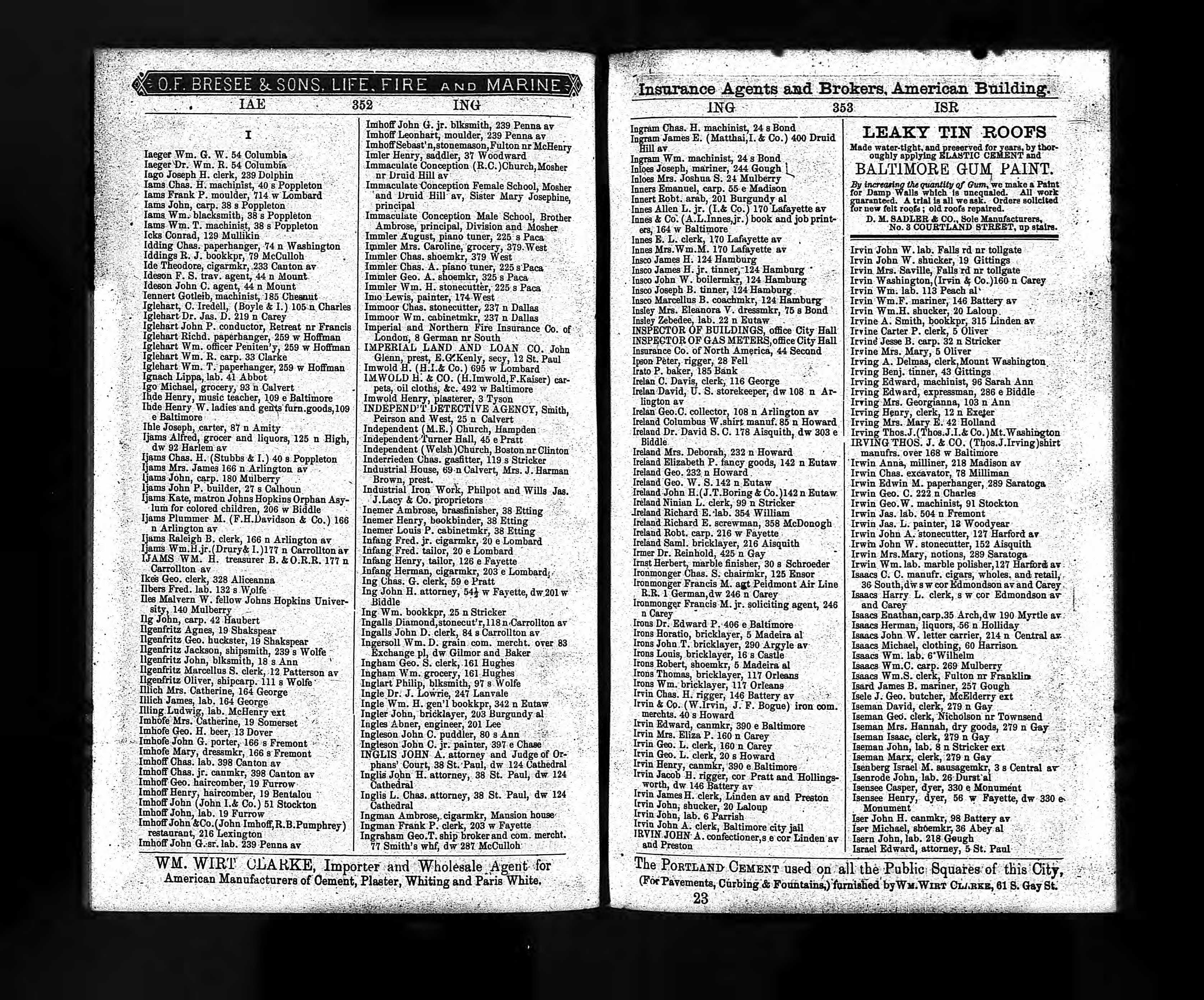
After their father’s death the older boys went to work. By 1878, twenty-year-old Raleigh and his oldest brother Plummer Montgomery (1850–1901) are both listed at 166 N. Arlington Avenue in Wood’s Baltimore City Directory — Plummer as a partner in the firm F.H. Davidson & Co., Raleigh as one of its clerks.7 Davidson was a hardware house: the 1878 Maryland classified directory lists it under “Hardware” and the firm’s own advertisement reads Dealers in Hardware, Cutlery, Tools, &c. This was the kind of merchant house that imported German blades from Solingen and English ones from Sheffield, retailed them under its own brand, and weathered the post-war years on volume. A straight razor stamped F.H. Davidson & Co. Baltimore still surfaces in collector channels — a small physical echo of the inventory Raleigh once stocked.
By the 1880 census Plummer had stayed on at the hardware firm — recorded as “Clerk in Hardware” — while Raleigh had moved on to a stint as a “Clerk in Bakery House.”8 He was still living with his widowed mother and most of his unmarried siblings in Baltimore. The third surviving brother, John Tabb Ijams (1852–1923), was long since gone: he had left Baltimore for New York in 1873, the year their father died, and had built a steady career there — first as a clerk in a wholesale dry-goods commission house, then from 1876 as the proprietor of his own woolen-mills agency.1 In April 1881 John married Phoebe Adele Smith and settled in Manhattan, attending the Episcopal Church of the Incarnation at Madison Avenue and 35th Street.
John was the only Ijams brother to marry. Plummer would die at 50 a bachelor, Raleigh at 48, and the youngest brother James Edgar at 72 — all single, all without children. Of the sisters, Marion and Joshan both married but died in their early thirties without children of their own; Elizabeth never married, and lived a long, unmarried life into her late eighties. Of James and Dorcas’s nine children, John alone had a family. It was a generation that, for whatever combination of reasons, did not much reproduce itself.
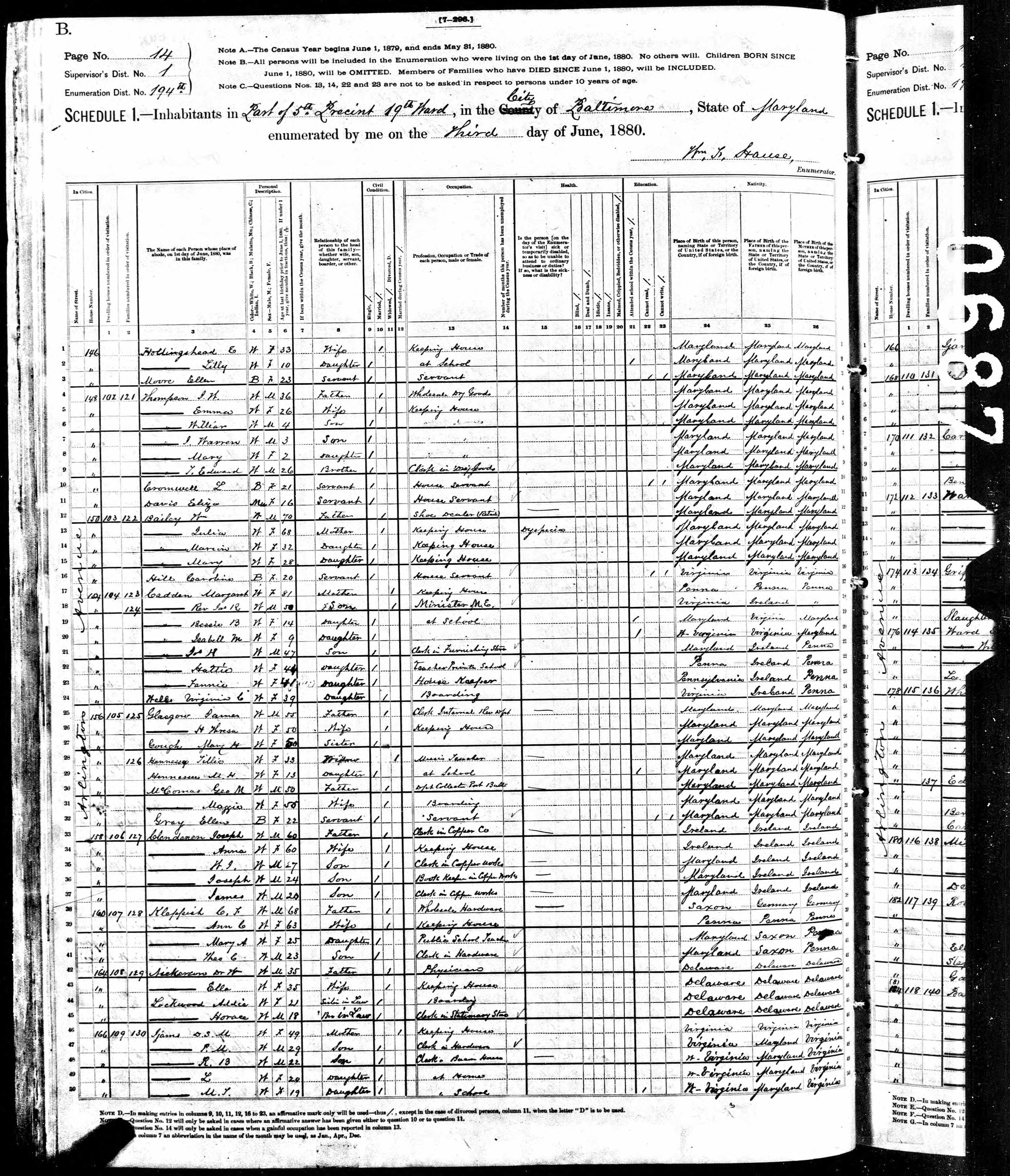
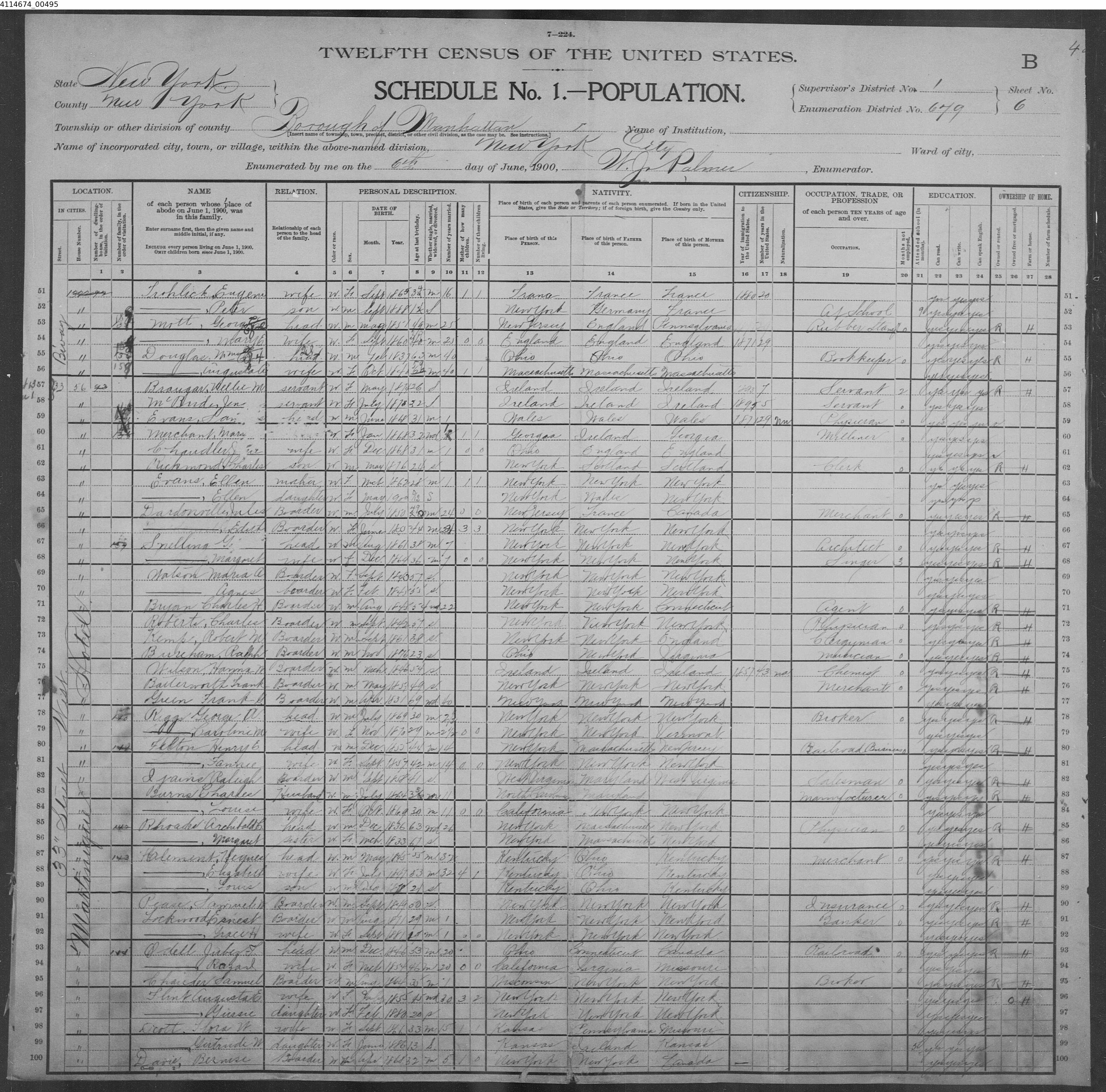
By the late 1890s the rest of the family was being pulled north too. Dorcas appears to have moved to New York to live near John and his growing family; she died there on 20 April 1898, and her Baltimore Sun obituary identified her residence as New York City.9 When the 1900 census enumerator visited Manhattan’s Enumeration District 679, Raleigh appears as a 41-year-old single boarder, born September 1859 in West Virginia, occupation “Salesman.”10 Plummer alone had stayed in Baltimore; he would die there, also unmarried, in November 1901, age 50.11 John, meanwhile, was on the verge of a pivot: in 1900 he liquidated his woolen-mills agency and became a partner in the banking house of Fisk & Robinson on Nassau Street, and from 1908 in William A. Read & Company.1 The death certificate filed a few years later would record Raleigh’s occupation as “Banker” — presumably the world he had moved into, in orbit around his brother’s new financial life.
Later Years
By the winter of 1905 Raleigh was writing from Saranac Lake, New York — and that placement is no coincidence. Saranac Lake was the home of the Trudeau Sanatorium, founded by Dr. Edward Livingston Trudeau in 1885 and the first tuberculosis sanatorium in the United States. The village had become the country’s premier destination for “cure cottages” — small private boarding houses where consumptive patients took the rest cure: long hours on screened porches in cold mountain air, supervised diet, isolation from the smoky cities where the disease had become epidemic. Raleigh was a paying guest at one of those cottages, using a private post office box for his mail.
Cure cottages were not cheap, and by January 1905 Raleigh had been ill long enough to have left whatever work he was doing in New York. The most likely source of his support was John, by then a partner at Fisk & Robinson with two children and an established life on Madison Avenue — the only one of the surviving siblings in a position to keep his brother in care. The brothers had been one another’s economic safety net since their father’s death in 1873; it would have been characteristic of the pattern.
We have the good fortune to have his short letter from that period.12 At three pages, in a hand that he himself almost certainly could not steady, the letter is a striking artifact of the cure regime — the closing “per E.J.” indicates that he dictated it to a member of the cottage staff because he was too ill to write it himself.
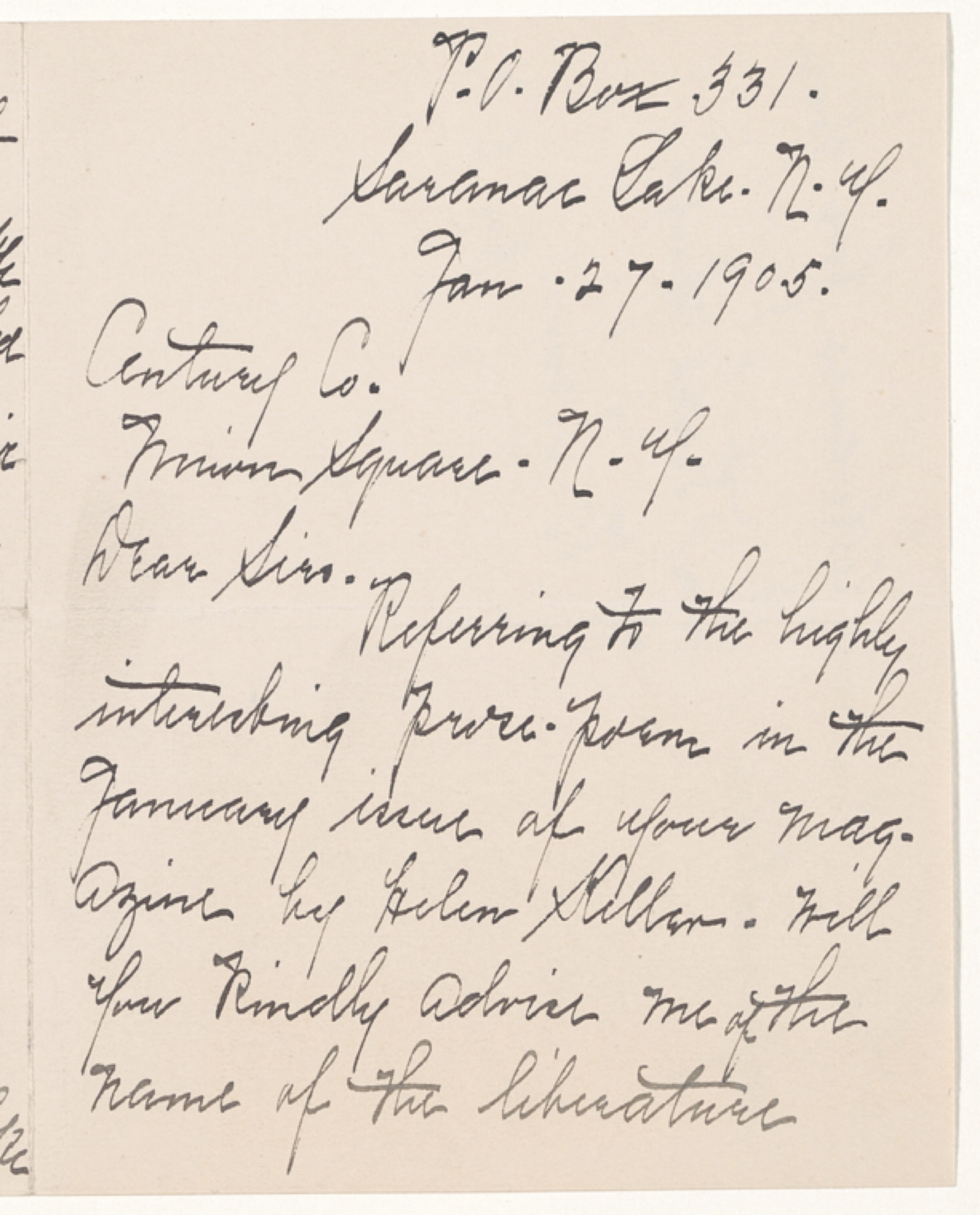
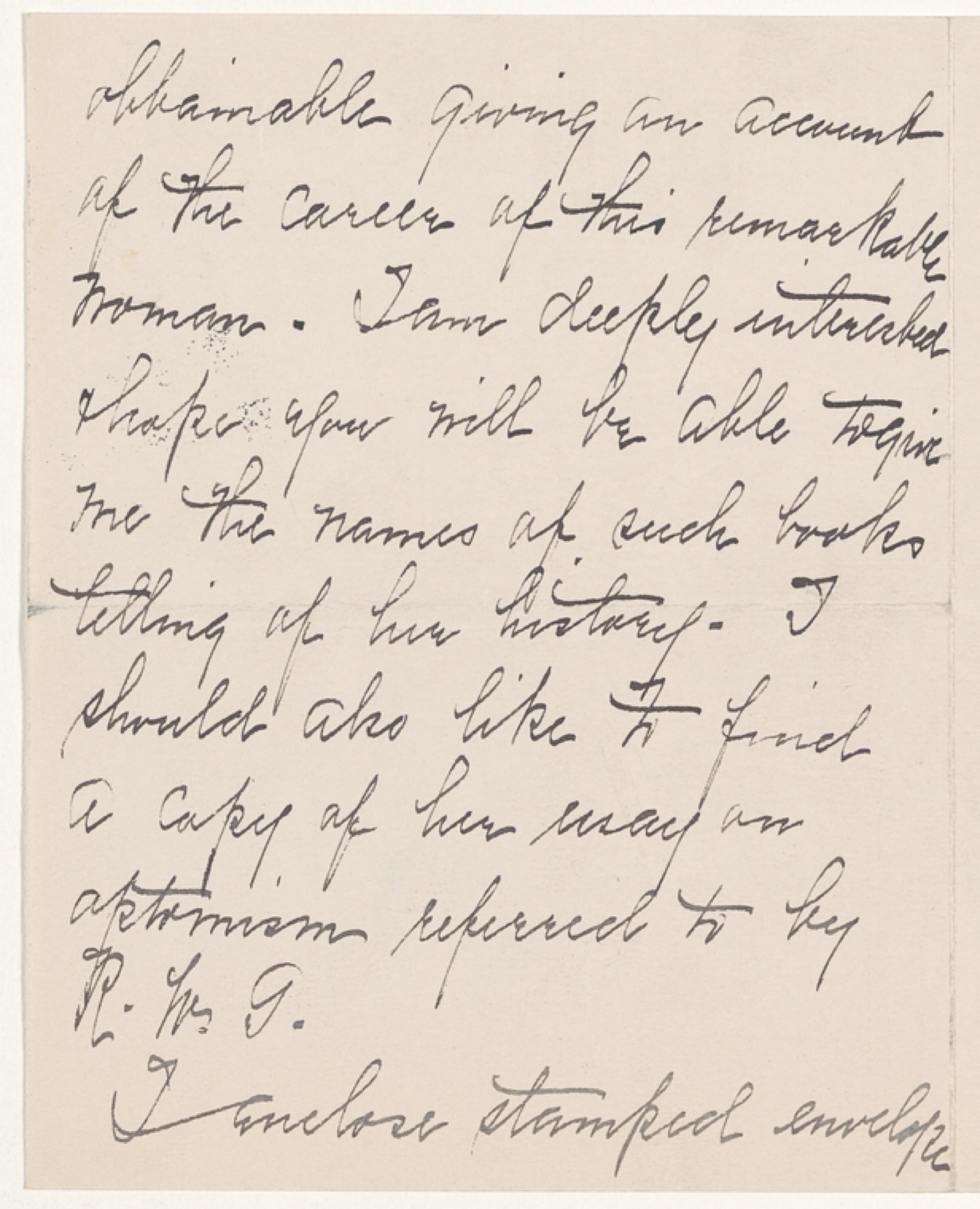
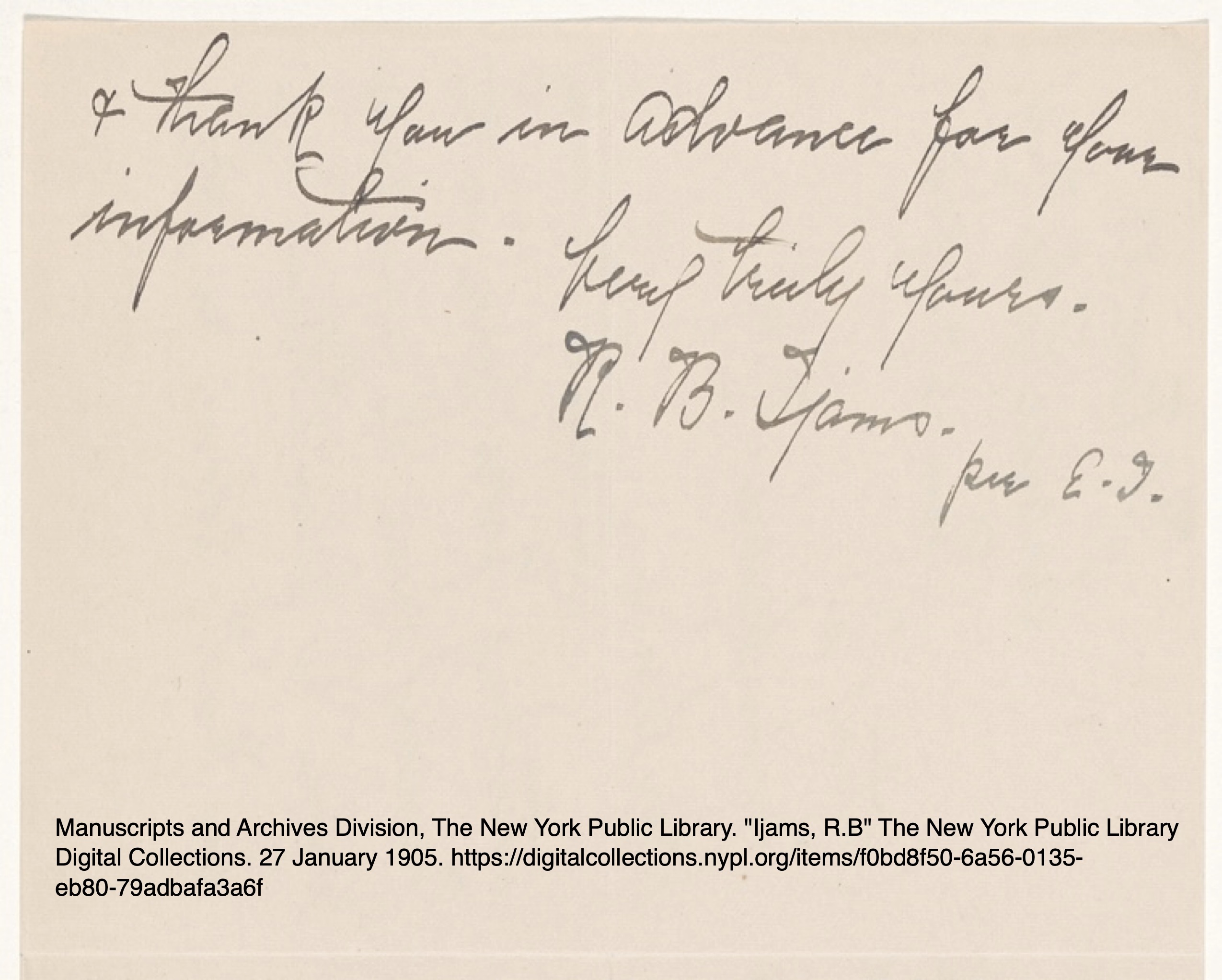
With the help of ChatGPT, we have an easy to read transcription.
P.O. Box 331.
Saranac Lake. N.Y.
Jan. 27. 1905.Century Co.
Union Square. N.Y.Dear Sirs.
Referring to the highly interesting prose-poem in the January issue of your magazine by Helen Keller.13 Will you kindly advise me of the name of the literature obtainable giving an account of the career of this remarkable woman. I am deeply interested & hope you will be able to give me the names of such books telling of her history. I should also like to find a copy of her essay on optimism referred to by R.W.G.14
I enclose stamped envelope & thank you in advance for your information.
Very truly yours,
R.B. Ijams.
per E.J.
The piece that caught Raleigh’s attention was Helen Keller’s “A Chant of Darkness,” published in the January 1905 Century — a long prose-poem in Whitman’s open-line cadence, framed as a psalm sung from inside the silent dark.13 Keller was twenty-five when it appeared, two years out from The Story of My Life, and was being positioned by the magazine’s editor Richard Watson Gilder as the literary voice of an inner world most readers could not enter. The Chant insists that darkness is not absence but a kind of presence; that the inner senses — imagination, memory, touch — yield their own light; that suffering can teach. Three years later Keller would expand the piece into a book, The World I Live In.
The “essay on optimism … referred to by R.W.G.” was Keller’s 1903 book Optimism: An Essay, a small T.Y. Crowell volume in which she argued that optimism is not a temperament but a discipline — a faith that leads to achievement, against which suffering is data to be transcended.15 Gilder’s editorial gloss on the Chant must have pointed Raleigh in its direction.
We cannot know what specifically drew him to these particular texts, but their resonance with the cure regime is hard to miss. The tuberculosis rest cure was, in 1905, largely a discipline of mental endurance: months on a screened porch in cold mountain air, holding the body still and the mind useful. Patients were prescribed optimism — the chosen kind, the worked-for kind — as if it were a therapeutic agent, because in the pre-antibiotic era it was about all they had. Keller’s Chant and her Optimism both offered exactly this: a framework in which long confinement could be inhabited rather than only endured, and in which an inner life could remain productive when the outer one had narrowed to a porch and a P.O. box. For a forty-six-year-old man whose hands could no longer steady a pen, the diagnosis must have felt like advice.
It is the only window we have into Raleigh’s inner life. The only words attributed to him in any record are this dictated letter, and the only book or essay he is recorded as having read is the one a young deaf-blind woman wrote about how to be still without going dark.
Death
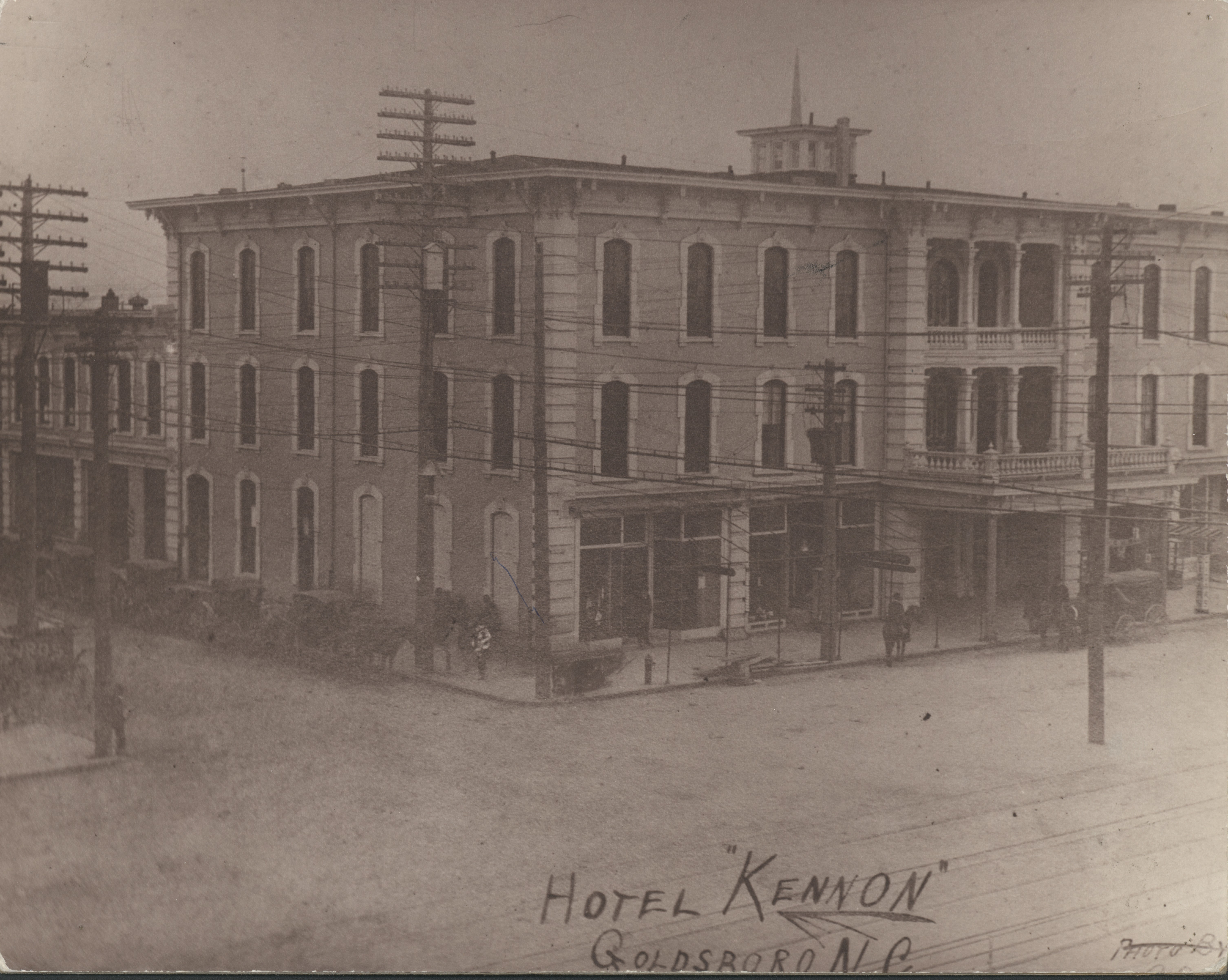
Raleigh died two years later, on 8 April 1907, at the Hotel Kennon in Goldsboro, North Carolina, where the cause of death was given as tuberculosis. Whether anyone was with him in the room when it happened is not recorded — the certificate names a cause and a place but no attending witness, John was in New York, the local papers carried no notice, and no friend or kin appears in any document tied to the death. He may well have died alone, with only the hotel staff who afterward sent word north.
Why Goldsboro at all is the other open question: he had no known family or business connection to the area. A plausible reading is that as his lungs failed he was moved south, as many late-stage consumptives were, away from the cold of Saranac to a warmer climate — and Goldsboro was a major rail junction reachable by a single line of through trains from the northeast. Whatever the reason for the destination, by 1907 only three of his eight siblings were still living: John Tabb in New York, his sister Elizabeth Tabb Ijams, and the youngest brother James Edgar, who the previous October had been reported in Prescott, Arizona. The eldest, Plummer, had died in Baltimore six years earlier.
It fell to John to handle the arrangements, and the death certificate was filed not in North Carolina but in the District of Columbia — an oddity that has a straightforward explanation. From New York, the rail route to Goldsboro passes through Washington; the return trip, with the body, would necessarily come back through the same junction. John almost certainly accompanied his brother’s remains north through Washington en route to Baltimore for burial, completing the certificate at the junction. He listed Raleigh’s occupation as “Banker.”
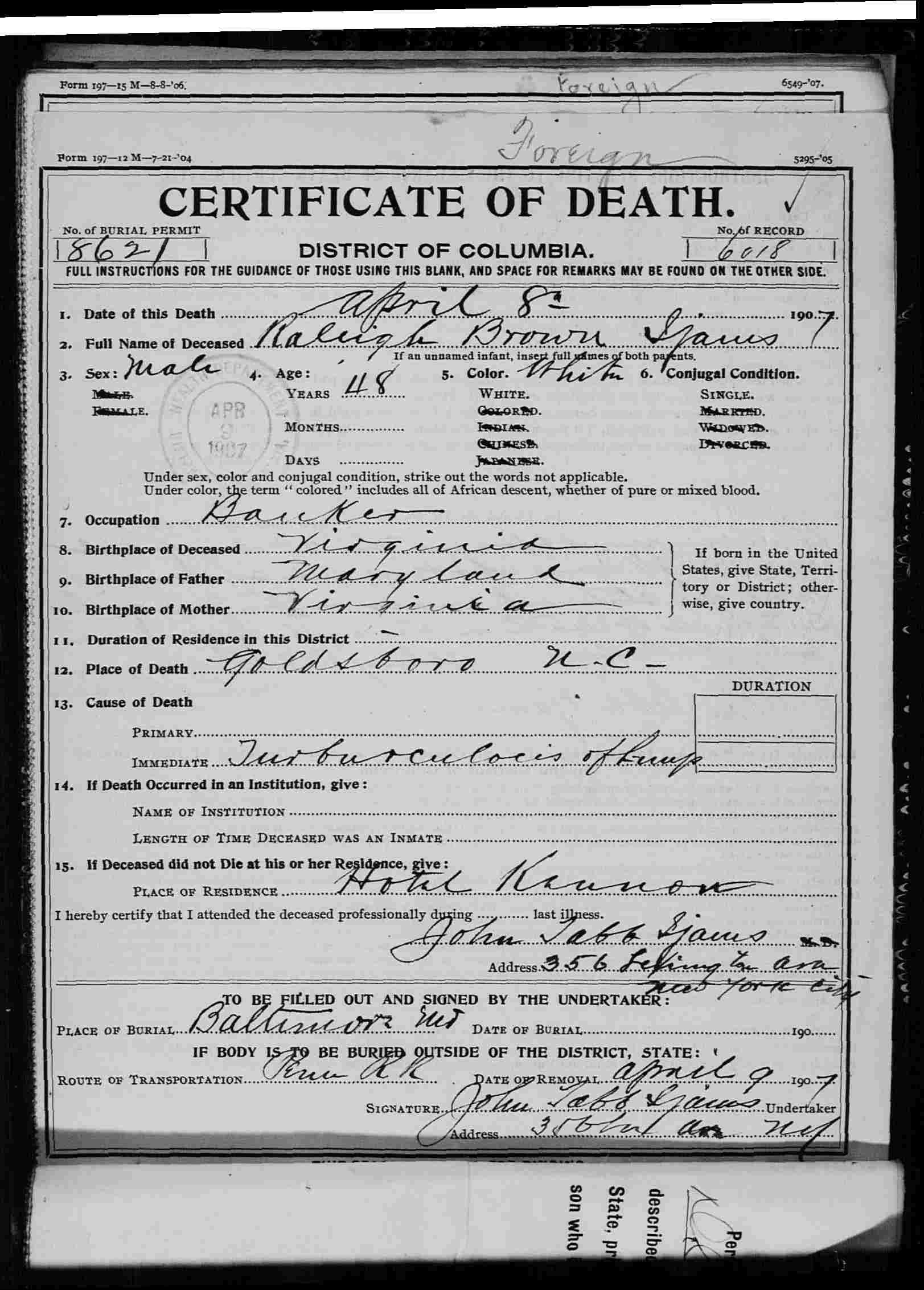
A search of the local Goldsboro newspapers reveals no death notification. Newspapers in New York City and Baltimore ran brief death notices, but no full obituaries — the one in The Baltimore Sun on the morning of his funeral was characteristically terse:16

The Church of the Ascension was an Episcopal parish in Baltimore — the same denomination John attended at the Church of the Incarnation in Manhattan, and almost certainly the family church the Ijamses had kept since their Maryland and Virginia generations. Raleigh was buried in the family plot at Loudon Park Cemetery in Baltimore, beside his parents.17
What survives of him is small: no portrait, no letters in his own hand, no wife or children, no firm career past the bakery clerkship of 1880. The Maryland Ijamses had given the state a village and a railroad; their late-Victorian generation, broadly speaking, did not pass through Raleigh. Only the Saranac Lake letter remains — the asking voice of a sick forty-six-year-old man who, against the long silence of a bedridden winter, was moved by a young woman’s chant about darkness and wanted to know more. It is how we know him at all.
-
Birth
Father James Ijams born
Born into a family already established in Maryland for more than a century — the line that lent its name to Ijamsville.
-
Birth
Mother Dorcas Tabb born
Daughter of John Tabb of Berkeley County, descendant of a Virginia line stretching back to the seventeenth century.
-
Birth
Born in Charles Town
Fifth of nine children of James Ijams, hotel keeper, and Dorcas Tabb. The Ijams name was already attached to a Frederick County village and the first Maryland railroad.
-
 War
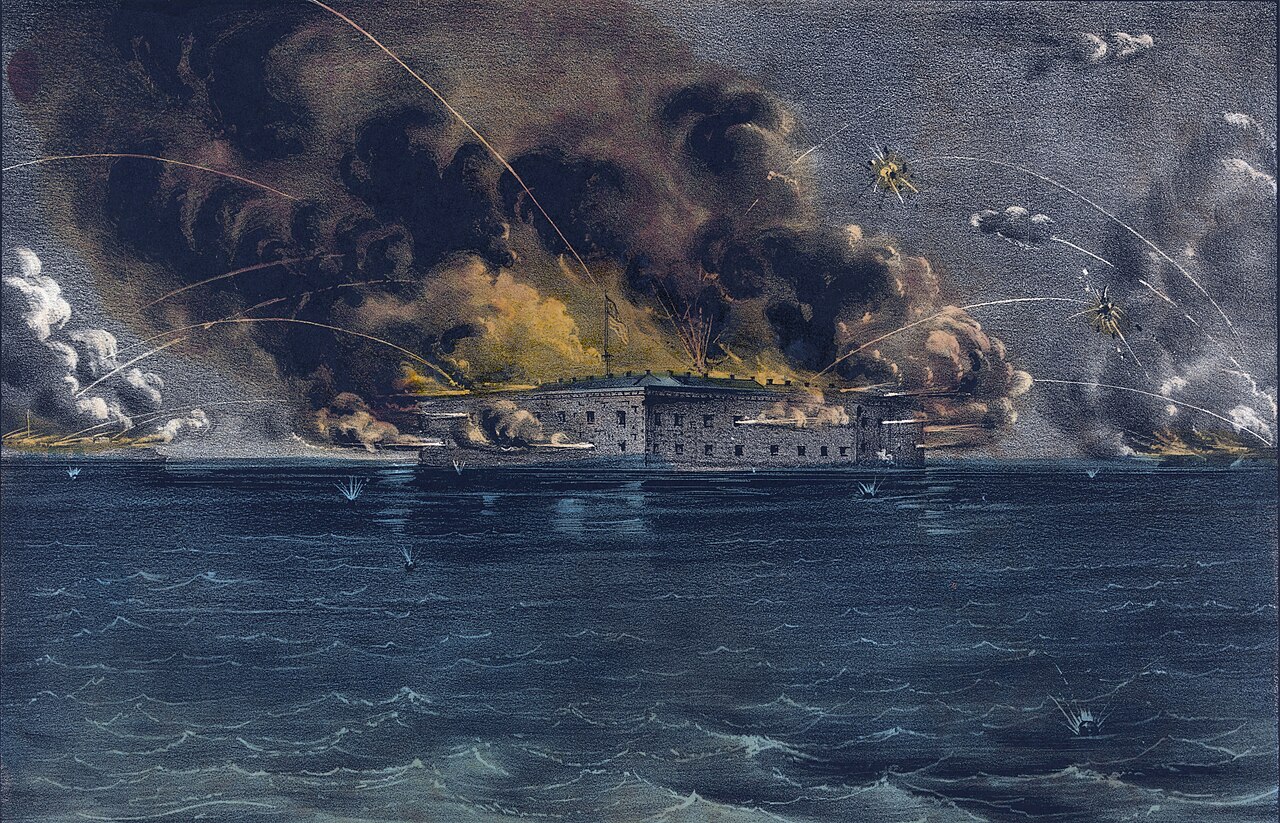
WarCivil War begins
Confederates fire on Fort Sumter, 12 April. James Ijams would enlist in the 3rd Battalion Virginia Valley Reserves.
-
Loss
First brother dies
Older brother James Edgar dies aged seven; sister Arabella will follow at the same age in 1864.
-
 Statehood
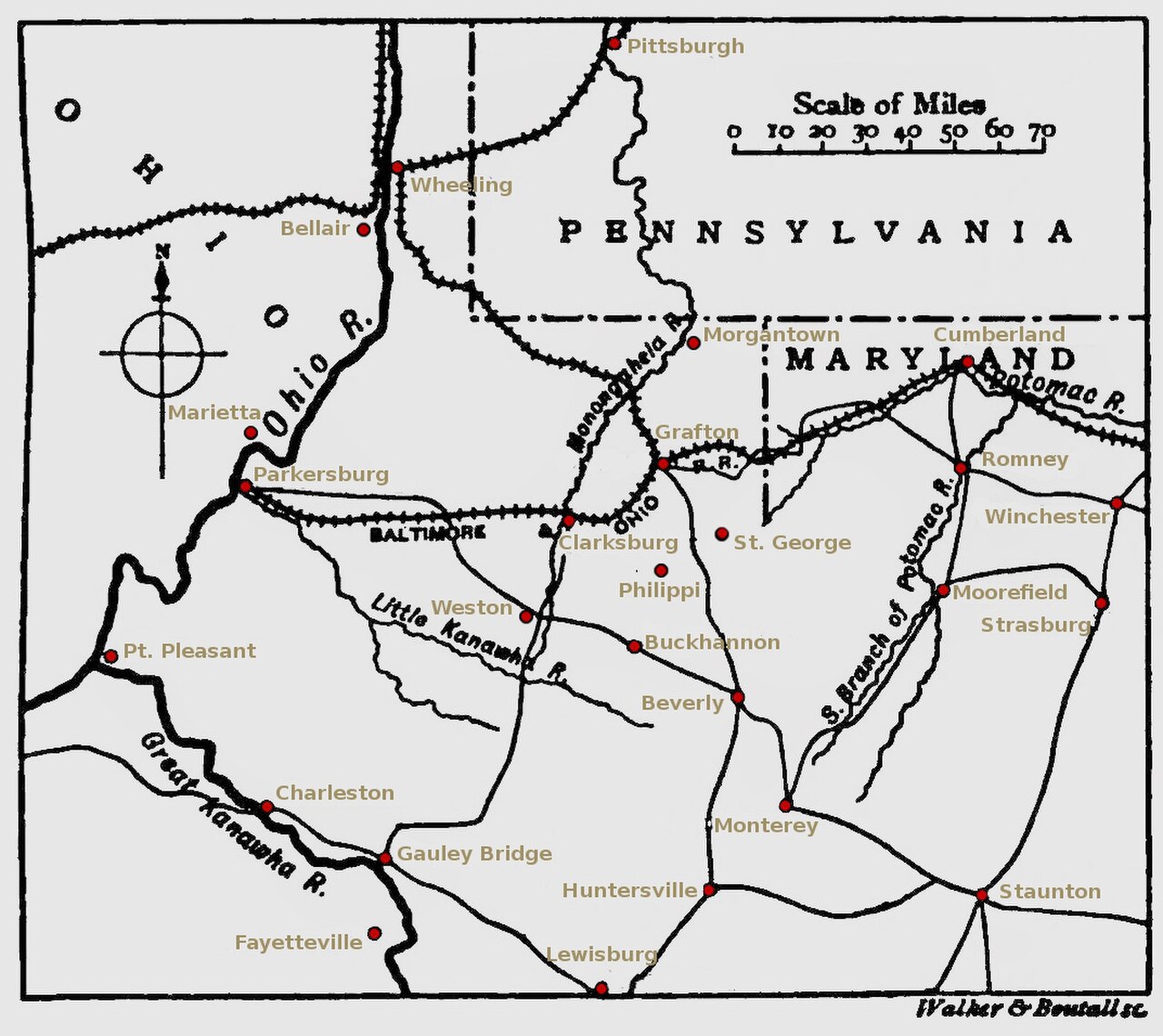
West Virginia becomes a state
20 June. The Ijams household's region — Jefferson and Berkeley counties — separates from Virginia in the middle of the war.
-
War's End
Family wealth collapsed
Confederate defeat ends the family's prosperity. Father's $2,000 hotel-keeping estate will be reduced to $200 by the next census.
-
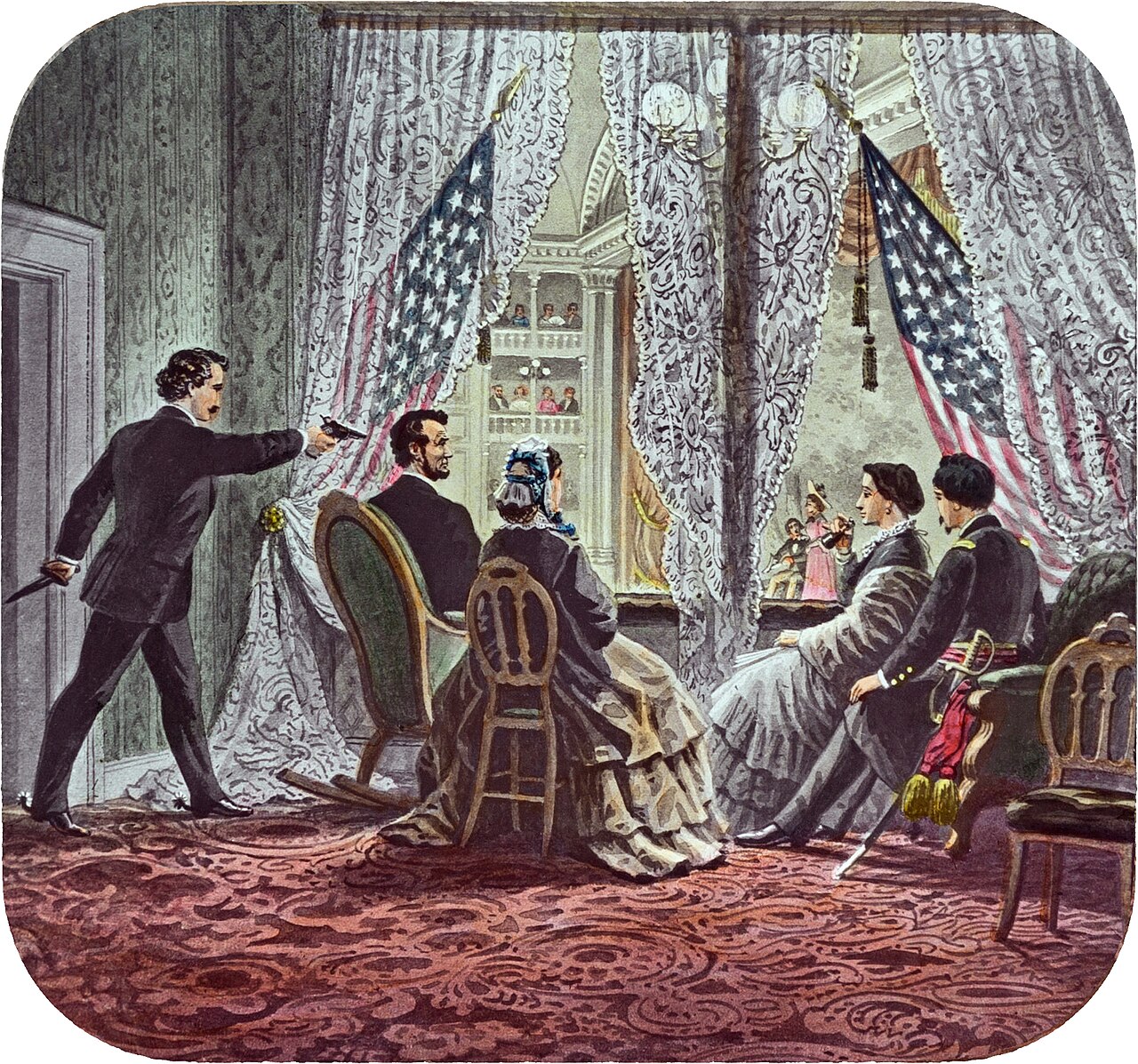 Assassination
Lincoln assassinated
Ford's Theatre, 14 April — five days after Appomattox.
-
Move
To Baltimore
Family relocates north; the 1870 census records young 'Rolla' — a phonetic rendering of Raleigh.
-
Loss
Father dies
James Ijams dies at 53. Dorcas widowed at 41 with eight children still at home.
-
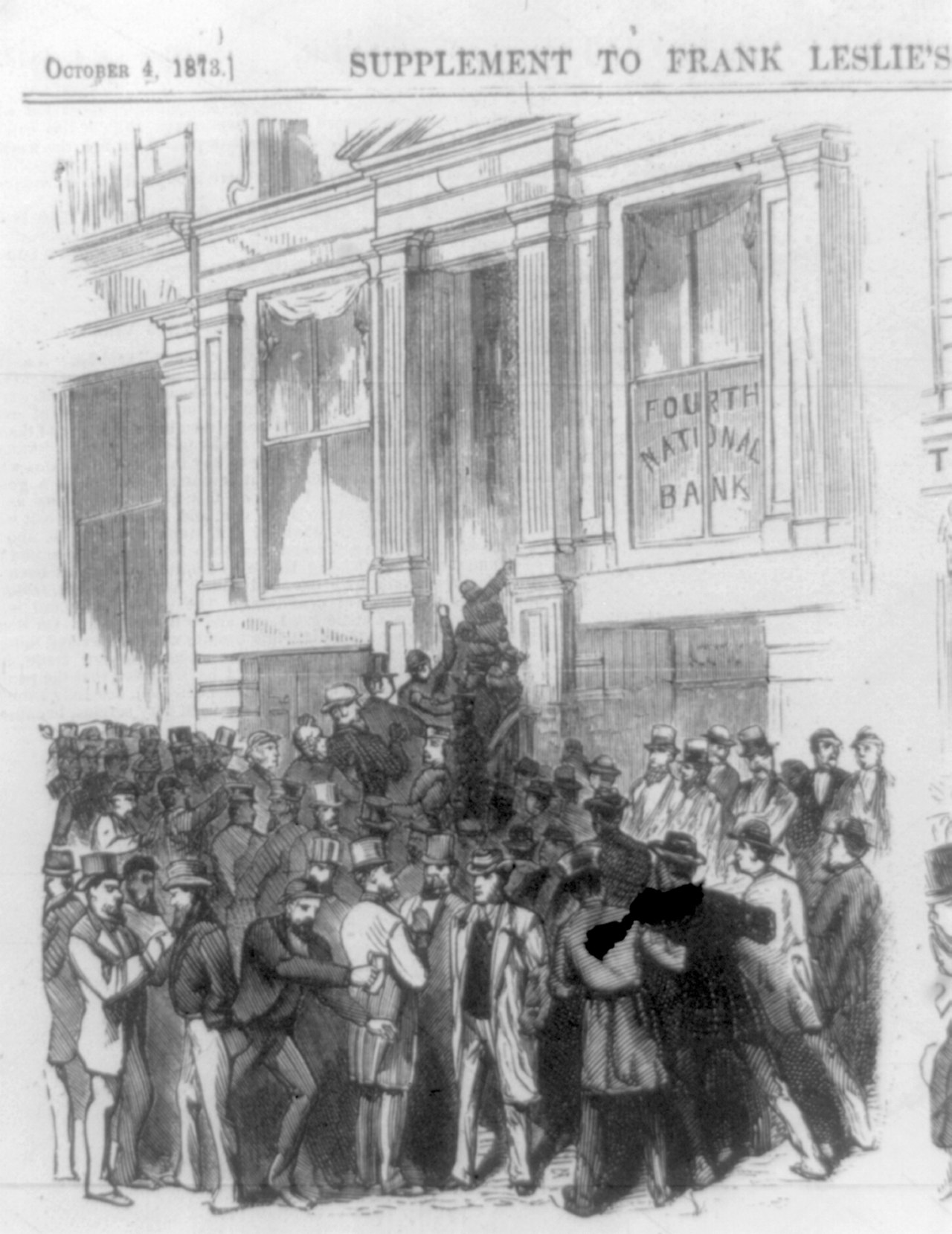 Panic
PanicPanic of 1873
Jay Cooke's failure triggers a six-year depression in the same year James Ijams dies.
-
Work
Clerk at F.H. Davidson & Co.
Working with eldest brother Plummer at a hardware-and-cutlery merchant house.
-
Family
Brother John marries in New York
John, in NYC since 1873, marries Phoebe Adele Smith. Builds a Manhattan dry-goods business that becomes a banking career by 1900.
-
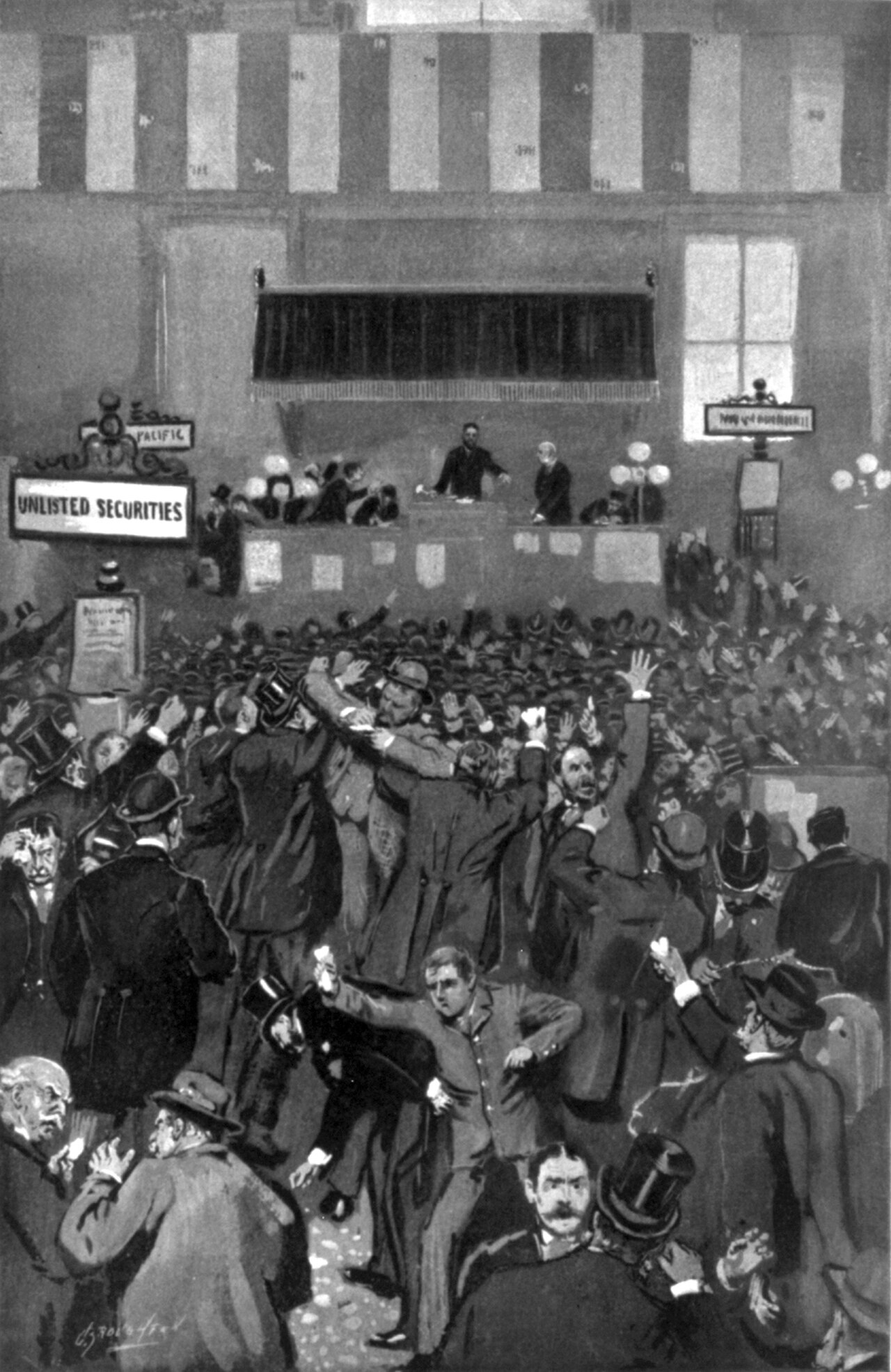 Panic
PanicPanic of 1893
Second great depression of the era; banking and railroad failures sweep the country.
-
Loss
Mother dies in New York
Dorcas dies at her residence in NYC, having moved north to live near John's growing family.
-
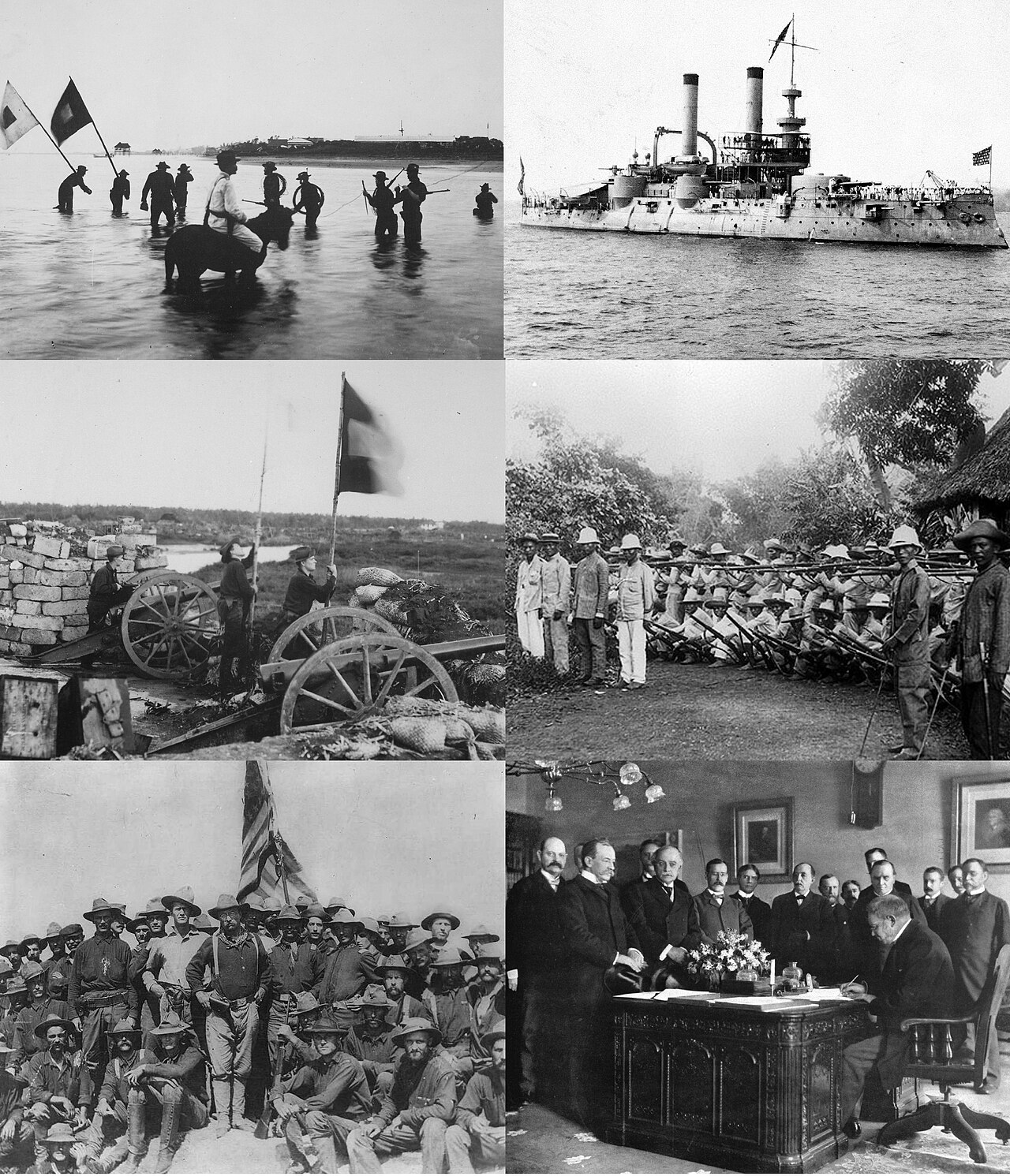 War
WarSpanish-American War
USS Maine explodes February; war formally ends in December with the Treaty of Paris.
-
Move
Manhattan, salesman
1900 census records Raleigh as a 41-year-old boarder in Manhattan, occupation 'Salesman' — now in John's NYC orbit.
-
Illness
Saranac Lake cure cottage
Too ill to steady his own pen, he dictates a letter to The Century Magazine asking about Helen Keller's prose-poem 'A Chant of Darkness.'
-
 Death
DeathDied at the Hotel Kennon
Likely moved south for the warmer climate as his lungs failed. Buried in the family plot at Loudon Park, Baltimore, beside his parents.
-
Death
Brother John dies
John Tabb Ijams dies at 71, having outlived Raleigh by sixteen years; buried in Flushing, Queens.
Sources
“John Tabb Ijams” entry, Encyclopedia of Virginia Biographies, vol. IV (New York: Lewis Historical Publishing Company, 1915); transcription by Chris Davis, Genealogy Trails (http://genealogytrails.com/wva/berkeley/bios1.html : accessed 31 May 2026). The sketch supplies the Ijamsville origin, the Tabb-Berkeley County lineage, James Ijams’s Confederate service under Stuart and in the commissariat, and John Tabb Ijams’s New York career from 1873 through Fisk & Robinson (1900) and William A. Read & Co. (1908). ↩︎ ↩︎ ↩︎ ↩︎ ↩︎
1860 U.S. census, Jefferson County, Virginia, population schedule, James Ijams household; “Jefferson, Virginia, United States records,” images, FamilySearch (https://www.familysearch.org/ark:/61903/3:1:33SQ-GBSF-9BNR?view=index : accessed 29 January 2025), image 53 of 276; United States. National Archives and Records Administration. ↩︎
Compiled Service Records of Confederate Soldiers Who Served in Organizations from the State of Virginia, James Ijams, 3rd Battalion Valley Reserves (Augusta County Reserves), Company A; National Archives microfilm publication M382, roll 29. ↩︎
1860 U.S. census (slave schedule), Jefferson County, Virginia, entry for James Ijams; “United States Census (Slave Schedule), 1860,” FamilySearch (https://www.familysearch.org/ark:/61903/1:1:W2XL-HB2M : accessed 3 November 2024). ↩︎
1860 U.S. census (slave schedule), Jefferson County, Virginia, entry for James Ijams; “United States Census (Slave Schedule), 1860,” Ancestry (https://www.ancestry.com/search/collections/7668/records/91146504 : accessed 29 January 2025). ↩︎
1870 U.S. census, Baltimore (Independent City), Maryland, population schedule, Ward 19, page 247, line 10, James Iiams; imaged, “United States, Census, 1870,” FamilySearch (https://familysearch.org/ark:/61903/1:1:MN34-1KQ : accessed 16 December 2025). ↩︎
Wood’s Baltimore City Directory for 1877 (Baltimore: John W. Woods, 1877), 352, entries for “Ijams Plummer M. (F.H. Davidson & Co.) 166 n Arlington av” and “Ijams Raleigh B. clerk, 166 n Arlington av”; digital images, Internet Archive (https://archive.org/details/woodsbaltimoreci1877balt : accessed 30 May 2026). ↩︎
1880 U.S. census, Baltimore County, Maryland, population schedule, enumeration district (ED) 194, page 127 (stamped), line 96, Dorcas Susan Mitchell Tabb; imaged, “United States, Census, 1880,” FamilySearch (https://familysearch.org/ark:/61903/1:1:MNQD-1CT : accessed 16 December 2025). ↩︎
“Deaths” notice for Dorcas Tabb Ijams, The Baltimore Sun, 21 April 1898; transcribed at USGenWeb Maryland Obituaries (http://ftp.rootsweb.com/pub/usgenweb/md/baltimore/obits/obits-i.txt : accessed 31 May 2026). ↩︎
1900 U.S. census, New York County, New York, population schedule, Borough of Manhattan, enumeration district (ED) 679, sheet 6-B, family 163, line 82, Raleigh Brown Ijams; imaged, “United States, Census, 1900,” FamilySearch (https://familysearch.org/ark:/61903/1:1:MSKD-W7R : accessed 16 December 2025). ↩︎
“Deaths” notice for Plummer M. Ijams, The Baltimore Sun, 27 November 1901. ↩︎
Manuscripts and Archives Division, The New York Public Library, “Ijams, R.B.”, 27 January 1905; The New York Public Library Digital Collections, https://digitalcollections.nypl.org/items/f0bd8f50-6a56-0135-eb80-79adbafa3a6f. ↩︎
Helen Keller’s piece in the January 1905 issue of The Century Magazine was “A Chant of Darkness,” The Century Illustrated Monthly Magazine, vol. 69, no. 3. ↩︎ ↩︎
“R.W.G.” is Richard Watson Gilder (1844–1909), editor-in-chief of The Century Magazine from 1881 until his death. ↩︎
Helen Keller, Optimism: An Essay (New York: T.Y. Crowell & Co., 1903). ↩︎
“Deaths” notice for Raleigh Brown Ijams, The Baltimore Sun, 10 April 1907, p. 4; digital images, Newspapers.com (https://www.newspapers.com/article/163725561 : accessed 23 January 2025), clip page by user dorsey4801. ↩︎
Find a Grave, database and images (https://www.findagrave.com/memorial/85171820 : accessed 31 May 2026), memorial 85171820 for Raleigh Brown Ijams (1858–1907), Loudon Park Cemetery, Baltimore, Maryland. ↩︎